Water-resistant hardwood flooring is one of the most searched topics I hear about on our showroom floor every single week. And honestly, I get it. You want that warm, classic wood look without the anxiety of a spilled glass of water turning into a flooring disaster. So let me give you a real answer right from the start: yes, water-resistant hardwood flooring exists, it performs well, and it can absolutely work in your home. But there are things you need to know before you pick a plank.

I have been helping homeowners find the right floors at our Mokena, Illinois, showroom for years, and the same questions come up over and over. This blog is my honest take, no sales spin, just the stuff I wish more people knew walking in.

What Does _Water Resistant_ Actually Mean for Hardwood

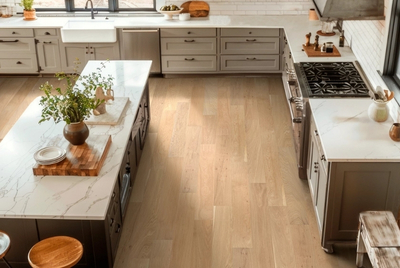
Shaw’s Repel Collection – Liberty Oak in Eclectic

What Does “Water Resistant” Actually Mean for Hardwood?

Water-resistant hardwood flooring repels moisture and handles everyday spills. However, it is not the same as waterproof flooring, and that distinction really matters. A water-resistant finish buys you time. If your dog knocks over a water bowl and you wipe it up within a few minutes, your floor is fine. But if that same spill sits for hours or days, even a well-finished hardwood can swell, warp, or stain.

So the key question is really about your lifestyle. Do you have kids? Pets? Do you want it in a kitchen or a bathroom? Those answers change everything about which direction I would point you.

Is Water-Resistant Hardwood Flooring Right for Your Space?

For living rooms, dining rooms, bedrooms, and hallways, water-resistant hardwood flooring is a fantastic choice. It gives you the real wood character that nothing else can quite replicate. Additionally, hardwood adds real resale value to a home in ways that other flooring types do not always match.

For kitchens, I usually have a longer conversation with customers. A water-resistant finish helps, but high-traffic kitchens with frequent mopping or families who tend to leave wet areas can be tough on hardwood in the long term. In those cases, I often bring up luxury vinyl plank, which is 100% waterproof and still gives you a convincing wood look. It is worth comparing both side by side before committing.

For basements, I am going to be straight with you: solid hardwood is not the right call. The moisture levels below grade are just too unpredictable, especially here in the Midwest. However, engineered hardwood is a different story, and I will cover that next.

Engineered Hardwood_ The Best Water-Resistant Hardwood Option

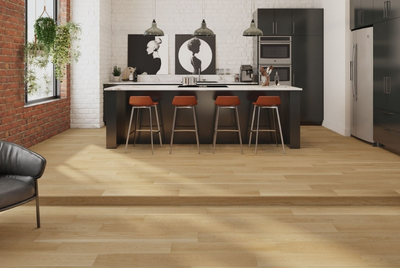
Préverco’s Fume-FX in White Oak

Engineered Hardwood: The Best Water-Resistant Hardwood Option

Engineered hardwood is hands down the most popular water-resistant hardwood flooring option I recommend. It features a real wood veneer on top and a layered core underneath. That construction makes it far more stable against moisture and temperature swings than solid hardwood. Furthermore, it handles Illinois winters, where humidity drops dramatically, without the gapping and cracking that solid wood can experience.

We carry engineered hardwood from brands like Shaw, Mirage, Préverco, and Hallmark in our hardwood flooring collection. These are not budget lines. They are products built to last in real homes with real families. The finishes on today’s engineered hardwood are also significantly better than they were even five years ago. Many collections feature aluminum oxide coatings that are extremely tough against surface moisture.

Ask specifically about the finish rating, not just whether a floor is “engineered.” A thicker aluminum oxide finish means more protection. I always pull this info out for customers before they fall in love with a particular style, so there are no surprises later.

Which Wood Species Should You Actually Buy?

Not all wood species react to moisture the same way. Harder, denser species naturally resist moisture better than softer ones. Here are the species I most commonly recommend for water-resistant hardwood flooring:

  • White oak is one of the top choices. It has a naturally tighter grain than red oak, which makes it slightly more resistant to moisture penetration. It is also having a major style moment right now, so it works beautifully in both traditional and modern homes.
  • Hickory is incredibly dense and durable. It handles heavy use and surface moisture better than most. The variation in its grain also hides minor scuffs and wear well.
  • Maple is another hard, dense option. It is popular in modern and Scandinavian-style interiors and holds a finish very well.
  • Red oak is still a classic and widely available, but its more open grain makes it a bit more absorbent than white oak. It works fine with a good finish, but it is not my first choice for a kitchen-adjacent area.
The Finish Is Doing More Work Than You Think

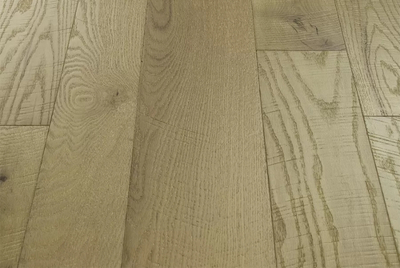
Hallmark Floors’ Organic 567 Collection in Rosehip Red Oak

The Finish Is Doing More Work Than You Think

The finish on water-resistant hardwood flooring is doing a lot of the heavy lifting. Think of it as the shield between moisture and the wood itself. There are a few finish types worth knowing.

  • Aluminum oxide finishes are the most protective option available for prefinished hardwood. They are applied at the factory under heat and UV light, creating an extremely hard surface. Most of the hardwood brands we carry use this finish type.
  • Oil finishes penetrate the wood rather than sitting on its surface. They look stunning and feel very natural underfoot. However, they require more maintenance and are less forgiving of surface moisture than aluminum oxide. They are great for low-traffic spaces.
  • Polyurethane finishes are common on site-finished or refinished floors. They offer good protection but are not quite as tough as factory-applied aluminum oxide coatings.

If you are choosing between two floors you love equally, always go with the one that has the factory-applied aluminum oxide finish for higher moisture areas. The protection difference is real, and you will not regret it.

How Do I Keep My Hardwood Floors Looking Great?

Even the best water-resistant hardwood flooring needs a little TLC to stay looking great. The good news is that it is not complicated at all. Follow these habits and your floors will last for decades.

  • Wipe up spills immediately. This is the single most important rule. Water resistance buys you time, not immunity.
  • Use a slightly damp mop, never a soaking wet one. Excess water sitting in the seams is one of the top causes of hardwood damage I see in homes.
  • Place mats at entryways to catch snow, salt, and moisture before it hits your floor. This is especially important in the Midwest from November through March.
  • Use felt pads under furniture legs to prevent scratching and denting.
  • Avoid harsh chemical cleaners. A cleaner specifically made for hardwood floors is all you need. Anything acidic can break down the finish over time.
  • Keep humidity levels stable in your home. Hardwood expands and contracts with humidity changes, so a consistent indoor humidity range of 35 to 55 percent is ideal.
Hardwood or Luxury Vinyl_ Which One Is Right for You

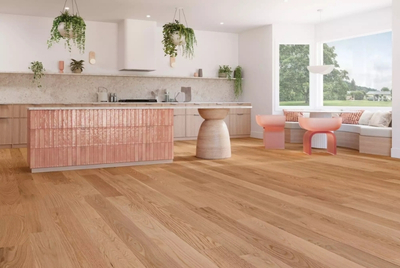
Mirage Lively Collection in Oak Natural Smooth Duralive

Hardwood or Luxury Vinyl: Which One Is Right for You?

This comparison comes up constantly, and it is a great question. Both are excellent floors. The decision really depends on where you are installing and how you live. Here is how I break it down for customers:

  • Choose water-resistant hardwood flooring if you want authentic real wood, you are installing it in a living room, bedroom, or dining area, and you are comfortable with the maintenance habits outlined above. Nothing replicates the warmth and character of real hardwood.
  • Choose luxury vinyl plank if you need 100% waterproof protection, are finishing a basement, or have a very active household where daily mopping is a reality. Modern LVP looks incredibly realistic and is significantly more forgiving.

For a deeper look at how these materials compare in terms of durability, check out our blog on durable flooring examples. It covers a lot of the same questions from a slightly different angle.

Come See Water-Resistant Hardwood Flooring in Person

Here is something I always tell people: flooring decisions are really hard to make from a photo on a screen. The texture, the sheen, the way it looks under your specific lighting, all of that changes dramatically in person. We actually encourage customers to take samples home, which many big-box stores will not do.

We have two showrooms where you can see our full selection of water-resistant hardwood flooring and engineered hardwood. Our Mokena, Illinois, location is on La Grange Road, just off I-80, and is a great stop if you are coming from Tinley Park, Frankfort, New Lenox, or Orland Park. Our Highland, Indiana, showroom on W 45th Street serves Crown Point, Munster, Dyer, Schererville, and the surrounding northwest Indiana communities.

We are a family-owned business that has been doing this since 1990. When you walk in, you won’t get a pushy sales pitch. You are going to get an honest conversation about what actually makes sense for your home, your lifestyle, and your budget. That is just how we operate. Feel free to walk in anytime or schedule an appointment if you would like dedicated time with one of us.

If you are also exploring the latest 2026 flooring design trends, I recommend reading our recent post on 2026 flooring design trends. There is a lot of great information in there about wide-plank hardwood and textured finishes that directly tie into what customers are loving right now.

Water-resistant hardwood flooring is one of those products where the right choice makes a huge difference in how happy you are five years down the road. I love helping people get that right. Come see us, and let’s figure it out together.